
Introduction:
Sample preparation equipment includes all the instruments used to isolate, purify, concentrate, or transform samples before they go into an analyser. Good sample preparation equipment is the foundation of accurate results — the best analytical instrument in the world cannot fix a badly prepared sample. LabXcite, laboratory equipment supplier in Bangalore, Karnataka, India, stocks a full range of sample preparation equipment for every lab type.
What Is Sample Preparation in a Laboratory?
Sample preparation is the set of steps you carry out on a raw sample before it enters your main analytical instrument. It might mean breaking open cells to release DNA, centrifuging blood to collect plasma, or cutting a biopsy block into thin slices for microscopy. Poor sample preparation equipment — or poor technique with good equipment — is the leading cause of analytical errors in research and diagnostic labs. The most common sample types that need dedicated sample preparation equipment are blood, tissue, food, water, and soil.
Key Types of Sample Preparation Equipment
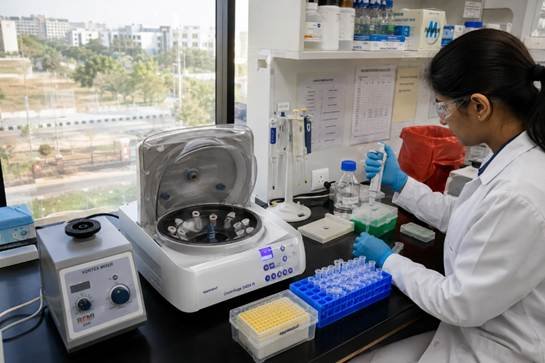
Here are the six most important pieces of sample preparation equipment and what each one does:
| Equipment | Core Function | Common Application | Silo Link |
| Centrifuge | Separates particles by density under centrifugal force | Cell pelleting, serum/plasma separation, DNA isolation | centrifuge working principle |
| Autoclave | Steam sterilisation at 121°C and 15 psi | Media sterilisation, waste decontamination | autoclave sterilization |
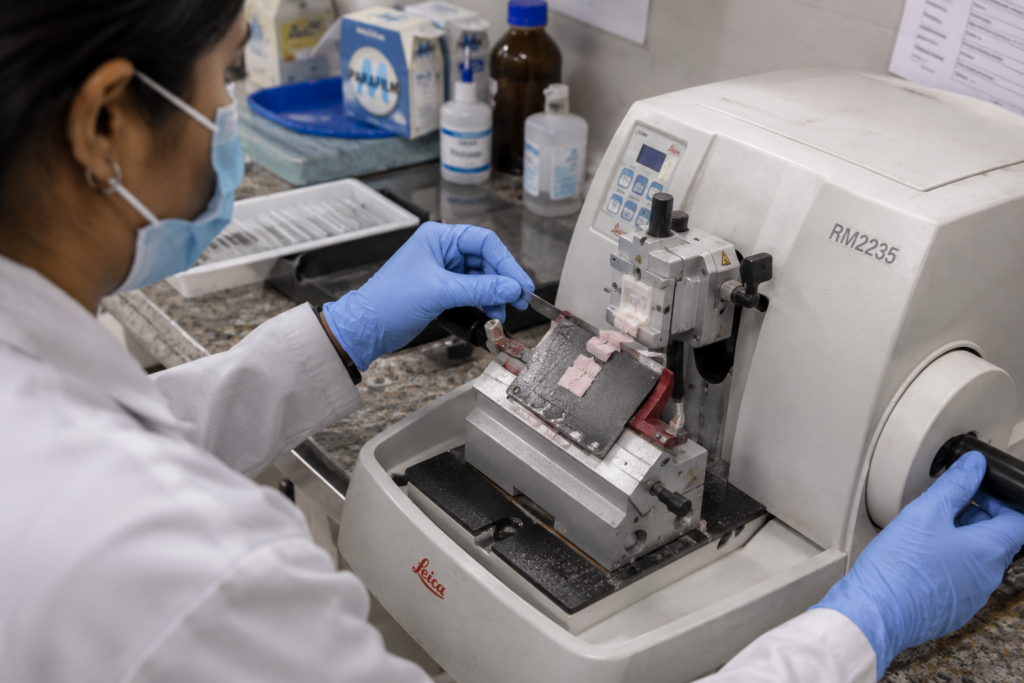
| Microtome | Cuts tissue blocks to 3–5 µm thin sections | Histopathology, immunohistochemistry | microtome sectioning techniques |
| Tissue Dissociator | Breaks solid tissue into single-cell suspension | Flow cytometry, scRNA-seq, primary cell culture | tissue dissociation methods |
| Homogeniser / Bead Mill | Lyses cells and grinds tissue by mechanical action | Protein extraction, RNA release from tough tissue | laboratory equipment guide |
| Vortex Mixer | Rapid mixing and resuspension of small samples | Tube mixing, reagent prep before assay | laboratory equipment guide |
Sample Preparation Workflows by Research Type
Different labs use sample preparation equipment in very different sequences. Here is how it maps across four major contexts:
| Research Type | Sample Prep Steps | Key Sample Preparation Equipment |
| Molecular Biology | Cell lysis → nucleic acid extraction → quantification | Bead mill or homogeniser, centrifuge, vortex mixer |
| Histology | Fixation → dehydration → embedding → sectioning | Tissue processor, microtome, water bath |
| Cell Biology | Tissue dissociation → cell counting → culture | Tissue dissociator, centrifuge, cell counter |
| Clinical Diagnostics | Blood collection → centrifugation → serum separation | Centrifuge, sample tubes, biochemistry analyser |
How to Choose Sample Preparation Equipment for Your Lab
- Match the sample preparation equipment to your sample type. Soft tissue, viscous blood, solid food, and aqueous water all need different instruments. A centrifuge built for small Eppendorf tubes is the wrong tool for processing 50 mL blood samples.
- Check material compatibility with your downstream method. Some sample preparation equipment introduces trace metals or plasticisers that interfere with mass spectrometry or trace metal analysis. Confirm chemical compatibility before ordering.
- Think about throughput. Sample preparation equipment sized for 10 samples per run will bottleneck a lab processing 80 samples per day. Check rotor capacity, cycle time, and batch size before committing.
- Choose a supplier with local service support. Sample preparation equipment runs intensively — when something fails, you need a technician within 24 hours. LabXcite in Bangalore provides in-region service support across Karnataka and South India.
| India Lab Tip: If your lab is working toward NABL accreditation, all critical sample preparation equipment must be on your equipment register with calibration and maintenance records per ISO/IEC 17025 clause 6.4. Centrifuges need rotor inspection records; autoclaves need biological indicator test logs. |
Frequently Asked Questions
Q: What is sample preparation in a laboratory?
A: The procedure of transforming raw materials into a state suitable for downstream analysis is known as sample preparation. There are several steps involved in sample preparation, including homogenization, centrifugation, filtering, digestion, and sterilization, which will differ depending on the sample type. Inadequate sample preparation continues to be one of the main reasons for analytical errors in both research and diagnostic laboratories.
Q: What equipment is used for sample preparation?
A: Centrifuges separate samples by density (one of many examples) as opposed to using other equipment used for sample prep like: autoclaves sterilize items of any shape or size, microtomes cut thin pieces of tissue off, tissue dissociators separate single cell type(s) from tissues and each piece can be used in a different analysis depending on how you use them. In short, the equipment will differ based on the sample’s identity (i.e., sample type) and how you plan to use them in the intended analysis (i.e., purpose).
Q: Why is sample preparation important in laboratory analysis?
A: Sample prep ensures that analytes are in a form, purity, and concentration appropriate for an accurate measurement of the analytes. Skipping or rushing the sample prep process will lead to contamination, interference from the matrix, and yielding false results that are not the result of instrument errors. In Good Manufacturing Practice (GMP) and National Accreditation Board for Testing and Calibration Laboratories (NABL) accredited laboratories, the quality of sample preparation can be correlated with regulatory compliance.
Q: Where can I find sample preparation equipment suppliers in Bangalore?
A: LabXcite is a Bangalore-based company (located within the state of Karnataka), that sells sample preparation equipment made up of various items such as centrifuges, autoclaves, microtome’s and tissue dissociators. They serve a diverse range of customers including Researches, Pharmaceutical companies and diagnostic labs throughout the nation of India.
Conclusion
To obtain accurate data, you will require suitable equipment for preparing your samples. The type of your laboratory or the amount of throughput you will need for your sample preparation equipment, and a schedule for maintaining the sample preparation equipment are also important factors in the selection process when buying sample preparation equipment.
Quality Sample Preparation Equipment from a supplier who understands the type of laboratory you operate in, will reduce one of the larger categories of analytical errors and money wasted due to error. LabXcite is a supplier of laboratory products to laboratories located in Bangalore, India. The laboratory equipment supplier offers a comprehensive range of sample preparation equipment and a complete listing of items can be found in the products section.