
Introduction:
An automated cell counter is an equipment used in laboratories to determine the quantity and health of cells in a sample, thus eliminating the tedious task of visual counting through a microscope. Using an cell counter gives faster, more consistent results for cell culture work, and it is now common across Bangalore biotech and Karnataka cell therapy labs.
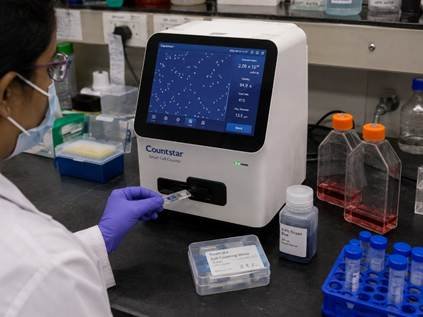
How Does an Automated Cell Counter Work?
Most automated cell counter models use one of two methods. The first takes a picture of the cell sample and uses software to spot and count each cell by shape and size. The second passes cells through a tiny gap and counts the tiny electrical pulse each cell makes. Image-based cell counter models are more common in everyday labs since they can also check cell health at the same time.
Types of Automated Cell Counters
Whichever automated cell counter type you pick, all of them aim to remove the guesswork that comes with manual counting.
| Type | Method | Best Use |
| Bright-field image-based | Camera + trypan blue stain | Routine, budget-friendly counting |
| Fluorescence image-based | Camera + live/dead dye | Low-viability or tricky samples |
| Flow cytometry-based | Electrical + optical detection | High-end, adds marker data |
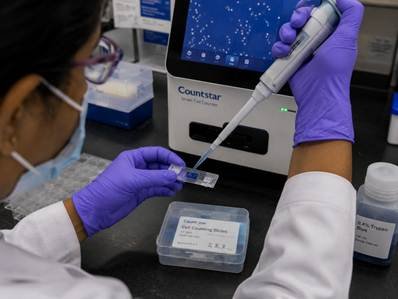
Automated Cell Counter vs Haemocytometer
This comparison is why so many GMP and cell therapy labs have switched from manual counting to an automated cell counter for daily work.
| Factor | Haemocytometer | Automated Cell Counter |
| Operator variation | High | Low |
| Counting time | Slow | Fast, ~30 seconds |
| Viability data | Manual, error-prone | Automatic |
| Record keeping | Hand-written | Digital, audit-ready |
How Cell Viability Is Measured
Most cell counter tests use a dye called trypan blue. Live cells keep the dye out and look clear, while dead cells let the dye in and turn blue. Viability is worked out as: percent viability equals live cell count divided by total cell count, multiplied by 100. This simple check tells you if your culture is healthy before moving forward with an experiment.
How to Choose an Automated Cell Counter
- Check if your cell type is small or clumps easily.
- Decide the daily sample volume you expect.
- Choose trypan blue or fluorescence viability testing.
- Check if you need GMP-style digital records.
- Match the price to your lab budget.
FREQUENTLY ASKED QUESTIONS
Q: How does an automated cell counter function?
A: Typically, this device photographs the sample and employs software to identify cells by shape and size or particles are allowed to move through a small opening while measuring the electric pulses generated. Many models also check viability at the same time using a stain like trypan blue.
Q: Is an automated cell counter a more precise method than manual counting?
A: In most cases, the automated cell counter offers a better accuracy than manual counting with the use of the hemocytometer because it eliminates the individual differences between operators and enables counting of higher quantities of cells in the sample.
Q: What does trypan blue do in cell counting technique?
A: Trypan blue is one type of dye which is used along with an automated cell counter to determine the health of the cells. An intact cell membrane will prevent the trypan blue from entering the cell, making it appear clear whereas by functioning one, it will be observed that trypan blue has penetrated the cell who appear in blue thus enabling work to calculate viability ratio.
Q: What is the most suitable cell counter for research labs in India?
A: Automated cell counter utilizing bright-field technology itself will be of low cost and faster for regular processes associated with the cells. While low viability or very small cells require utilising fluorescence-based automatic cell counter for better efficiency.
Conclusion
An automated cell counter saves time, reduces human error, and gives your lab dependable cell counts and viability data every day. Whether you run routine cell culture or GMP manufacturing, the right counter model makes daily work faster and more trustworthy. Ready for change from manual counting techniques? LabXcite, laboratory equipment supplier in Bangalore, India, supplies automated cell counters for all sizes of laboratories – check out deals available.