
Introduction:
Autoclave sterilization is a method that kills pathogens, including tough spores, using high-temperature steam. It is the most trusted method labs use to keep equipment safe and clean. Knowing how autoclave sterilization works, and which cycle to pick, keeps your lab safe, compliant, and ready for daily use.
How Does Autoclave Sterilization Work?
The process of autoclave sterilization involves moist heat. Steam is kept under pressure, which raises its temperature significantly above 100 degrees Celsius, usually to 121 or 134 degrees Celsius. This heat causes breakdown of protein in microorganisms, killing them completely, including hard-to-kill spores. Moist heat is faster as well as more reliable than dry heat, which is why it is the method of choice for all laboratories and pharmaceuticals in Bangalore and Karnataka. Without correct autoclave sterilization, even the cleanest-looking glassware can carry hidden contamination into your next experiment.
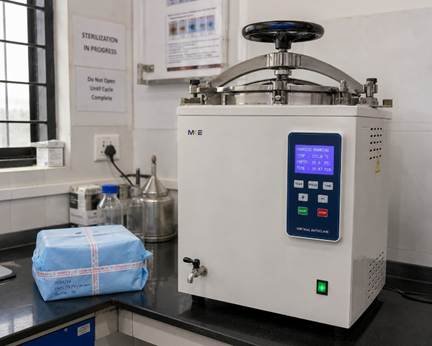
Autoclave Cycle Types
Picking the correct cycle is central to good autoclave sterilization, since liquids, wrapped packs, and waste all need slightly different time and pressure settings to be fully safe.
| Cycle Type | Temp / Time | Best For |
| Gravity displacement | 121°C, 15-20 min | Liquids, unwrapped items |
| Pre-vacuum (porous load) | 134°C, 3-5 min | Wrapped packs, instruments |
| Liquid cycle | 121°C, slow exhaust | Bottled solutions |
| Waste cycle | 121°C, extended time | Biohazard waste bags |
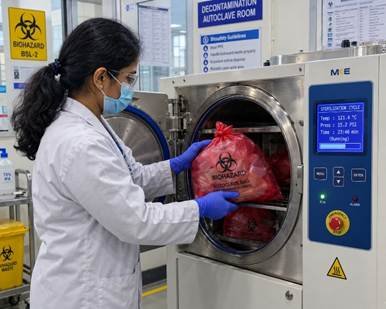
What Can and Cannot Be Autoclaved
Knowing what not to place inside can prevent damage to the chamber and keep autoclave sterilization safe for everyone in the lab.
| Safe to Autoclave | NOT Safe to Autoclave |
| Glassware, steel tools | Flammable chemicals |
| Aqueous media | Bleach-treated waste |
| Autoclave bags | Sealed containers |
| Polypropylene plastic | Polystyrene plastic |
How to Check Autoclave Sterilization Is Working
Regular checks like these confirm that your autoclave sterilization process is working correctly, cycle after cycle, and protect your lab during external audits.
- Use biological indicator spores weekly to confirm full kill.
- Use chemical strips that change colour when heat is correct.
- Check the built-in temperature and pressure chart every cycle.
- Maintaining an audit record of NABL or GMP
Safety Tips for Autoclave Sterilization
- Do not open the door when the process is going.
- Let off pressure completely before opening.
- Use heatproof gloves while unloading.
- Do not stuff autoclave bags too tightly.
- Do not overfill chamber.
- Check door seal regularly to maintain it in good condition
FREQUENTLY ASKED QUESTIONS
Q: How does autoclave sterilization work in a laboratory?
A: Autoclave sterilization employs steam that is trapped under pressure to elevate its temperature above the temperature of boiling water, which is about 121°C or 134°C. This moist heating destroys microbes’ protein content leaving no chance for any bacteria spores and killing them within a few minutes.
Q: What temperature does an autoclave use for sterilization?
A: Most institutions conduct autoclave sterilization at a temperature of 121°C for about 15-20 minutes for liquids and unwrapped articles and at a temperature of 134°C for about 3-5 minutes for sterilization of packed instruments. Both cycles fully destroy bacteria, viruses, fungi, and spores.
Q: How do I validate that autoclave sterilization worked?
A: Use biological indicator spore strips weekly, chemical colour-change indicators on every load, and check the built-in temperature and pressure chart after each cycle. According to requirements NABL and GMP laboratories in India shall function with complete compliance and will have to keep the necessary records.
Q: What materials cannot be autoclaved?
A: It is forbidden to sterilize items that contain any flammable materials, such as bleach and any sealed units; plastic materials like polystyrene and polyethylene cannot be used in an autoclave as they can be melted.
Conclusion
The use of autoclave sterilization is considered the best and safest method in cleaning laboratory instruments and disposing of biological waste. Selecting the right cycle and adhering to safety precautions preserves the safety of the staff, efficiency of the machines, and reliability of the output on a daily basis. Want a reliable autoclave for your laboratory? LabXcite, laboratory equipment supplier in Bangalore, India is a provider of authentic autoclaves in Bangalore, India along with the local technical support; visit us today to check our inventory.