
Introduction:
The biosafety levels laboratory classification goes from BSL-1 up until BSL-4, and every level has its own regulation for safety procedures, facilities, and equipment to operate with organisms that have greater risks involved in their use. Biosafety levels laboratories in India are regulated by the Department of Biotechnology through the Institutional Biosafety Committees of the country as many Bangalore-based research institutes such as NCBS and IISc comply with the regulations in their day – to – day work.
What Are Biosafety Levels?
Biosafety levels laboratories stand for the tier system according to the WHO regulations where different organisms are classified in one of the Risk groups according to their classification from 1 to 4 as per their associated risks. This Risk Group then decides which biosafety levels laboratory rules a lab must follow, from simple hand-washing at BSL-1 to full-body suits at BSL-4.
BSL-1 to BSL-4 – Quick Comparison
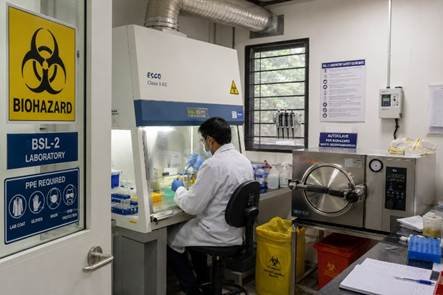
Most Bangalore biotech and academic labs operate under biosafety levels laboratory rules for BSL-2, since this covers the majority of common research organisms.
| Level | Example Organisms | Key Requirement |
| BSL-1 | Non-pathogenic lab strains | Standard practices, no BSC needed |
| BSL-2 | Hepatitis B, Salmonella | Class II BSC, autoclave in room |
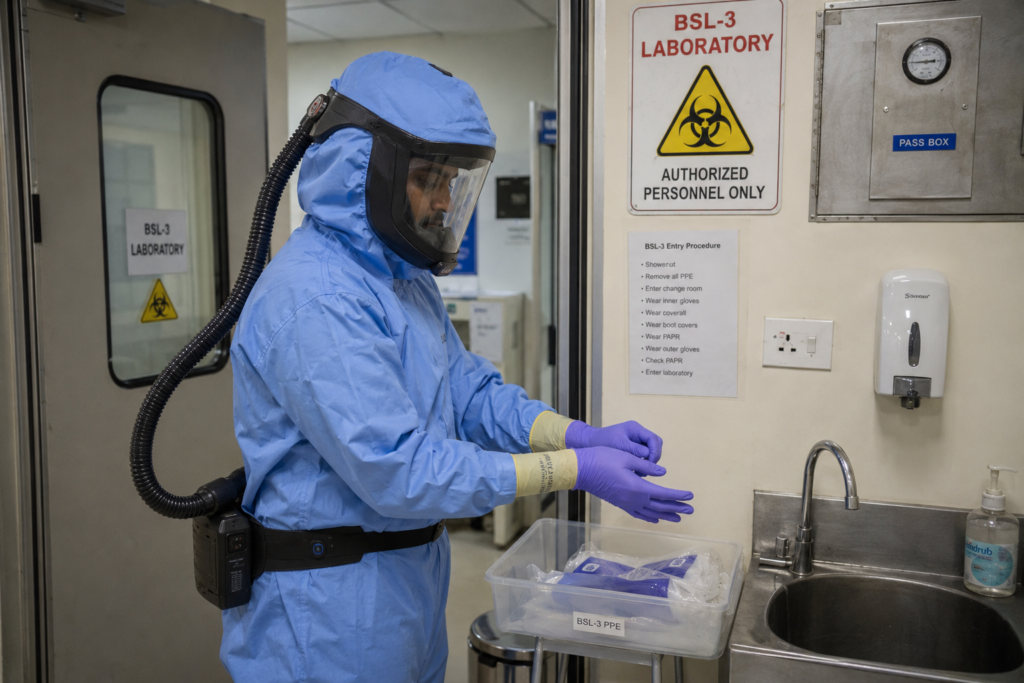
| BSL-3 | Tuberculosis, SARS-CoV-2 | Negative pressure room, respirator |
| BSL-4 | Ebola, Nipah virus | Positive-pressure suit, sealed building |
BSL-2 Requirements in India
Following biosafety levels laboratory rules at BSL-2 correctly protects both staff and the wider community from accidental exposure.
- Class II Type A2 biosafety cabinet for aerosol-generating work.
- Autoclave in the same room for waste decontamination.
- Restricted-access door signage with the biohazard symbol.
- All written standards operating processes should be made.
- People involved in procedures should be trained according to biosecurity needs.
- IBSC registration under DBT guidelines.
Biosafety Cabinet vs Fume Hood
A common and dangerous mistake in biosafety levels laboratory practice is treating a biosafety cabinet and a fume hood as the same thing. A biosafety cabinet uses HEPA filtration to protect the worker, the sample, and the room from biological hazards. A fume hood only protects the worker from chemical fumes and does not filter biological particles, so it must never replace a biosafety cabinet for microbiology work.
India’s IBSC Framework
Every institution doing recombinant DNA or microbiology work under biosafety levels laboratory rules in India must register an Institutional Biosafety Committee, or IBSC, under DBT’s Recombinant DNA Safety Guidelines. The IBSC reviews new research proposals, approves the correct containment level for each project, and reports upward to the Review Committee on Genetic Manipulation.
FREQUENTLY ASKED QUESTIONS
Q: What are the 4 biosafety levels and their requirements?
A: BSL-1 covers non-pathogenic organisms with standard lab practices and no special cabinet needed. BSL-2 covers moderately hazardous agents needing a biosafety cabinet and autoclave. BSL-3 covers airborne serious diseases needing negative-pressure rooms and respirators. BSL-4 covers deadly, untreatable diseases needing full positive-pressure suits.
Q: What are the BSL-2 laboratory requirements in India?
A: Setting up a laboratory of BSL-2 class status in India requires a biosafety cabinet II, autoclave within the lab premises, restricted area signage, standards operating procedures written down, trained staff, and IBSC registrations according to the Recombinant DNA Safety Guidelines by the DBT.
Q: Which organisms need to be kept in BSL-3 conditions?
A: BSL-3 conditions are required for organisms that can be transmitted through the air and result in serious or fatal diseases including tuberculosis, SARS-CoV-2 during its isolation, and some other pathogens from the Risk Group 3. The labs employing BSL-3 conditions have to follow protocols like creating a pressure differential and providing full respiratory protection.
Q: What is India’s IBSC and why is it necessary?
A: The Institutional Biosafety Committee or IBSC is a mandatory component of institutions involved in recombinant DNA or microbiological research in India. It evaluates safety in projects, establishes the applicable biosafety level, and ensures that all other conditions from the DBT guidelines are met.
Conclusion
Knowing the biosafety level laboratory rules gives protection to the scientists, the public, and the compliance status of the organization at the same time. Equipment and training must be at the correct level regardless of whether you have a low-containment BSL-1 laboratory or a high-containment BSL-3 lab. Starting a biosafety lab in Bangalore or Karnataka? LabXcite, laboratory equipment supplier in Bangalore, India, provides biosafety cabinets & PPE for every level – explore our range today.