
Introduction:
The techniques of laboratory based molecular biology are experimental methods used to observe & manipulate DNA, RNA, protein and living cells at the molecular level. These molecular biology laboratory techniques underpin modern biomedical research, drug discovery, molecular diagnostics, agricultural biotechnology, and forensic science. Mastering the right combination of molecular biology laboratory techniques is the foundation of every productive research or diagnostic lab.
In India, these techniques are applied across research institutions, pharmaceutical companies, diagnostic labs, and forensic science laboratories every single day. Bangalore is at the centre of this ecosystem — home to NCBS (National Centre for Biological Sciences), IISc (Indian Institute of Science), IBAB (Institute of Bioinformatics and Applied Biotechnology), and companies like Biocon that apply these methods at commercial manufacturing scale. LabXcite, laboratory equipment supplier in Bangalore, Karnataka, India, supplies the instruments and consumables that power these workflows.
What Are Molecular Biology Laboratory Techniques?
Molecular biology laboratory techniques are the practical procedures scientists use to work with biological molecules — primarily DNA, RNA, and proteins — inside and outside living cells. The word ‘molecular’ tells you the scale: these experiments happen at the level of individual molecules, using enzymes, chemical reagents, and precision instruments to copy, cut, join, measure, and visualise biological information.
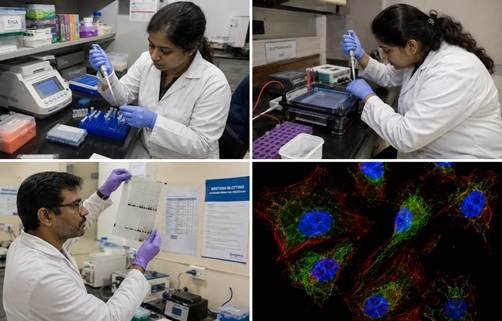
The discipline of molecular biology emerged from genetics and biochemistry in the mid-twentieth century. Today, molecular biology laboratory techniques span four main sub-disciplines: genomics (studying DNA and genes), transcriptomics (studying RNA and gene expression), proteomics (studying proteins), and cell biology (studying the behaviour of living cells). In practice, a working molecular biology lab uses all four areas simultaneously, depending on the research question.
The 8 Most Important Molecular Biology Laboratory Techniques
The table below summarises the eight-core molecular biology laboratory techniques every researcher should know — what each technique does, what equipment it needs, and where it is used in India.
| Technique | What It Does | Key Equipment Required | Where Used in India |
| PCR & qPCR | Amplifies and quantifies specific DNA or RNA sequences | PCR thermocycler, master mix, primers | Diagnostics (TB, COVID), pharma QC, forensics, genomics research |
| Cell Culture | Grows living mammalian, bacterial, or yeast cells outside the body | CO2 incubator, biosafety cabinet, centrifuge | Biopharma manufacturing, cancer research, vaccine production |
| Gel Electrophoresis | Separates DNA, RNA, or proteins by size through a gel matrix | Electrophoresis tank, power supply, UV transilluminator | All molecular labs — universal quality-check step |
| Western Blotting | Detects and characterises specific proteins by size and antibody binding | SDS-PAGE system, transfer unit, imaging system | Pharma R&D, academic protein biology, biomarker studies |
| ELISA | Measures proteins, antibodies, hormones, and analytes quantitatively | Microplate reader, plate washer, incubator | Clinical diagnostics, food allergen testing, pharma QC |
| Flow Cytometry | Counts and characterises cell populations using light scatter and fluorescent labels | Flow cytometer | Immunology, haematology, cell therapy development |
| DNA Sequencing (NGS) | Reads the complete sequence of DNA at very high speed and depth | NGS platform, bioinformatics software pipeline | Genomics, cancer mutation profiling, infectious disease surveillance |
| CRISPR-Cas9 Genome Editing | Cuts and edits the genome at specific target DNA sequences | Cas9 protein, guide RNA, delivery system | Gene therapy development, research, functional genomics |
These eight molecular biology laboratory techniques are not independent — in a real experiment, they are used in combination. For example, a cancer drug discovery project might use CRISPR to knock out a gene, cell culture to grow the edited cells, PCR and sequencing to verify the edit, Western blotting to confirm protein loss, and an ELISA to measure downstream pathway effects.
Cell Culture — The Foundation of All Mammalian Molecular Biology
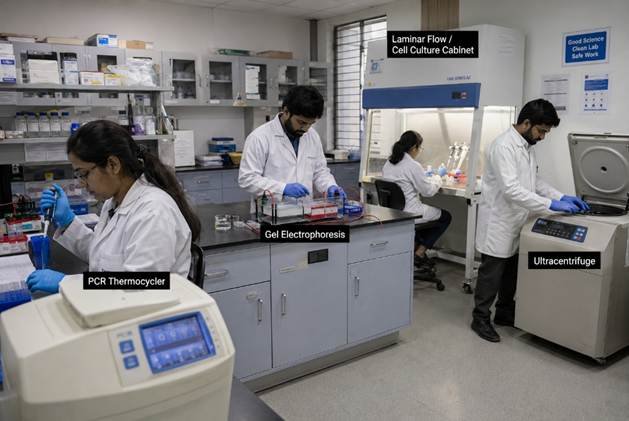
Among all molecular biology laboratory techniques, cell culture is the one that everything else depends on. Before you can study a protein in a living system, knock out a gene with CRISPR, test a new drug compound, or produce a therapeutic antibody, you need living cells. Cell culture is the practice of growing those cells outside the body in a controlled environment that mimics their natural physiological conditions.
Running a cell culture lab requires strict attention to sterile technique, environmental stability, and contamination prevention. Contamination — whether bacterial, fungal, or mycoplasma — is the most common and costly problem in cell culture. Mycoplasma contamination is particularly dangerous because it is completely invisible to the naked eye and only detectable by specific PCR or ELISA testing, yet silently alters cell metabolism, gene expression, and experimental results over months.
The four essential instruments for a mammalian cell culture lab are:
- Class II Type A2 biosafety cabinet: provides a sterile HEPA-filtered working environment for all cell handling. This is non-negotiable — you cannot reliably culture mammalian cells on an open bench.
- CO2 incubator: ensures your mammalian cell cultures remain at physiological conditions with three parameters: 37°C, 5% CO2, & 95% relative humidity. Any change in the above parameters may stress your cells and disrupt your results.
- The benchtop centrifuge is used for pelleting, washing and passaging cells, therefore it is used for transferring cells to new flasks or for performing downstream assays.
- Inverted-phase contrast microscope: used for daily assessment of the cell culture’s overall health, including confluence, morphology, and contamination checking, without disturbing the cells in culture.
Gel Electrophoresis and Nucleic Acid Analysis
Gel electrophoresis is the second verification step that connects the multitude of techniques used in a molecular biology laboratory technique. In one way, the gel run after a PCR reaction serves to verify that amplification has occurred. The gel run after a restriction enzyme digest serves to verify the size of DNA fragment(s). Finally, after extracting RNA from cells, the gel can be run to confirm RNA integrity before reverse transcription. Thus, although gel electrophoresis is one of the many techniques used in molecular biology, it also serves as an important quality control step that verifies all the above.
One of the basic principles involved in the above is that when a buffer gel (agarose) is subjected to an electric field, negatively charged DNA and RNA molecules will move toward the positively charged electrode. Smaller fragments travel faster and further; larger ones are slowed by the gel matrix. After running, you stain the gel with an intercalating dye (ethidium bromide, or the safer SYBR Safe alternative) and visualise bands under UV light.
- Always include a DNA size ladder — a pre-made mixture of DNA fragments of known size — in at least one lane. Without a ladder, you cannot determine the size of your amplified bands.
- The presence of 28S rRNA bands that are approximately twice as intense as 18S rRNA bands is an indication of high-quality, intact RNA useful for gene expression studies.
- SDS-PAGE (sodium dodecyl sulfate-polyacrylamide gel electrophoresis) is the protein equivalent to previously discussed techniques used to separate proteins on a molecular weight basis after denaturating the proteins with SDS; this separation occurs before proceeding to Western blotting.
Forensic DNA Analysis — Molecular Biology Laboratory Techniques in Law Enforcement
Forensic DNA analysis is one of the most publicly recognised applications of molecular biology laboratory techniques outside the research setting. When crime scene investigators collect a blood stain, hair follicle, or buccal swab, molecular biology laboratory techniques are what transform that biological material into a DNA profile that can identify a suspect or exonerate an innocent person.
The core forensic DNA technique is STR (Short Tandem Repeat) profiling — also called DNA fingerprinting. STRs are locations in the genome where a short DNA sequence repeats a variable number of times. Forensic scientists generate a numerical profile that is unique to each individual (except identical twins) by multiplexing (amplifying) 15–20 different STR loci in a single PCR reaction using capillary electrophoresis to size the amplified fragments (the resulting bands) in a way that provides identification evidence of the individual as required by law once matched with a sample from a crime scene.
- The Forensic Science Laboratory (FSL) in Bengaluru, Karnataka, processes DNA from suspected crimes throughout the state using PCR-based STR analysis with size determination from capillary electrophoresis.
- Chain-of-custody documentation is a mandatory part of forensic DNA analysis — evidence is only admissible in Indian courts when the sample collection, storage, transfer, and analysis chain is fully documented and unbroken.
- The same PCR and sequencing techniques used in clinical diagnostics and research are used in forensics — the difference is the legal and evidential standards applied to sample handling and data interpretation.
Molecular Biology Laboratory Techniques in India — Research & Commercial Landscape
India’s molecular biology laboratory techniques sector has grown dramatically over the past decade, with Bangalore as its centrepiece. As of 2022, the national market for molecular diagnostics is projected to exceed USD $1 billion, and the molecular diagnostic capabilities developed from India’s RT-PCR COVID-19 testing programme (over 900 million tests performed from 2020 – 2022) have helped to permanently establish the ability to perform molecular diagnostics for tuberculosis, hepatitis and cancer. (Source: ICMR, industry reports)
India’s genomics and personalised medicine ambitions are also accelerating. The IndiGen programme, led by CSIR-IGIB and CSIR-CCMB, sequenced 1,000 Indian genomes to establish a reference population dataset. Biocon Biologics — the world’s largest insulin manufacturer by volume — and Syngene International in Bangalore operate large-scale molecular biology laboratory techniques in biomanufacturing and drug discovery respectively. NCBS publishes leading research in cell signalling, structural biology, and neuroscience, while IBAB runs one of India’s only dedicated bioinformatics and applied biotechnology training programmes.
| India Molecular Biology Fast Facts: • >90 crore COVID-19 RT-PCR tests conducted in India (2020–2022) — one of the world’s largest PCR scale-ups ever • India’s molecular diagnostics market: >USD 1 billion (2022 estimate, growing at ~12% CAGR) • Bangalore’s NCBS, IISc, and IBAB: three of India’s highest-output molecular biology research institutions • IndiGen programme: 1,000 whole Indian genomes sequenced to build national reference genomic dataset • Biocon Biologics, Bengaluru: world’s largest insulin manufacturer — built on molecular biology and bioprocessing |
LabXcite’s Molecular Biology Equipment Range
Whether you are setting up a new molecular biology laboratory or upgrading an existing one, LabXcite in Bangalore provides the instruments, consumables, and expert support needed for all the key molecular biology laboratory techniques covered in this guide.
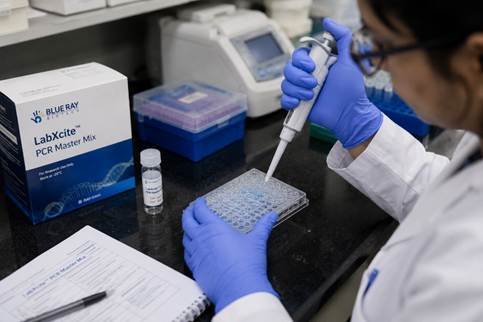
LabXcite‘s PCR product range — including thermocyclers, real-time qPCR systems, PCR master mixes, and thermal cycler accessories — is available at labxcite.com/product_category/pcr/. LabXcite is also a principal partner for Blue Ray Biotech, a specialist molecular biology reagent and instrument brand well-suited to the needs of Indian research and diagnostic labs. Explore the full Blue Ray Biotech range at labxcite.com/principal/blue-ray-biotech/. From gel electrophoresis systems and CO2 cell culture incubators to biosafety cabinets and molecular biology consumables, LabXcite’s Bangalore-based team can advise on instrument selection, protocol compatibility, and after-sales service anywhere in India.
Frequently Asked Questions
Q: What techniques are used in molecular biology?
A: The essential molecular biology laboratory techniques include PCR/qPCR (for amplification/quantification of DNA/RNA), cell culture (for growing cells for experimental purposes), gel electrophoresis (for separating nucleic acids/proteins by size), Western blotting (for detecting proteins), ELISA (for quantifying protein/antibody), flow cytometry (for phenotype analysis), Next Generation DNA Sequencing, and CRISPR-Cas9 genome editing. The combinations of these techniques used rely solely on the types of biological questions being investigated.
Q: What is a molecular biology laboratory?
A: A molecular biology laboratory is a dedicated facility that uses research or diagnostics related to cellular processes at the DNA, RNA, and protein levels. Examples of key types of equipment include PCR Thermocyclers, Gel Electrophoresis systems, CO2 Cell culture Incubators, Centrifuges, Spectrophotometers, Biosafety cabinets, and fluorescent microscopes. The molecular biology laboratories in India exist in: universities, biotech companies, research and development laboratories of pharmaceutical companies, hospitals (molecular diagnostics), and forensic laboratories.
Q: What is the most commonly used molecular biology technique?
A: The PCR method is one of the most widely used techniques across all laboratories of molecular biology laboratory techniques around the world through all aspects of research from lab-based to clinical, forensic, food safety testing and quality control for pharmaceuticals. The other two techniques most commonly used within molecular biology laboratories in India are gel electrophoresis and cell culture.
Q: What is the difference between molecular biology and cell biology?
A: Molecular biology is the branch of science that studies how biological processes — such as the replication of DNA, transcription of RNA, and synthesis and regulation of proteins — are carried out at the molecular level. Cell biology studies the structure, function, and behaviour of cells as the fundamental unit of life — including organelle function, cell signalling, division, and death. In practice the two disciplines overlap extensively, and most molecular biology laboratory techniques use living cells as the experimental system.
Q: Where can I find molecular biology lab equipment in Bangalore?
A: LabXcite, based in Bangalore, Karnataka, supplies a comprehensive range of molecular biology laboratory techniques and instruments including PCR thermocyclers, gel electrophoresis systems, CO2 cell culture incubators, and molecular biology consumables. LabXcite partners with Blue Ray Biotech (labxcite.com/principal/blue-ray-biotech/) for specialist molecular reagents and instruments. The PCR product range is available at pcr.
Conclusion
Molecular biology laboratory techniques sit at the heart of modern science and medicine — from diagnosing infectious disease in a clinical lab to editing genes in a research institute, from producing life-saving biologics in a Bangalore manufacturing facility to identifying a suspect from DNA evidence at Karnataka’s forensic lab.
As India’s biotech, pharma, and diagnostic sectors continue to grow, so will the demand for researchers who master these molecular biology laboratory techniques and the labs equipped to support them at the highest level. LabXcite, laboratory equipment supplier in Bangalore, India, is ready to support that growth — with a full range of molecular biology instruments, reagents, and consumables backed by knowledgeable local service. Visit labxcite.com/product_category/pcr/ for PCR equipment and labxcite.com/principal/blue-ray-biotech/ for the Blue Ray Biotech molecular biology range.