
Introduction:
Clinical laboratory equipment includes all the instruments used in healthcare settings to perform diagnostic tests on patient samples — blood, urine, tissue, and body fluids. The right clinical laboratory equipment determines how fast, how accurately, and how cost-effectively disease is diagnosed — directly impacting patient care across India’s hospitals and diagnostic centres. LabXcite, laboratory equipment supplier in Bangalore, Karnataka, India, supplies clinical laboratory equipment to diagnostic chains, hospital labs, and standalone centres across India.
What Is Clinical Laboratory Equipment?
Clinical laboratory equipment is used across five main departments in a hospital or diagnostic lab. Each department needs its own set of instruments calibrated to its specific test types. NABL accreditation under ISO 15189 — the international standard specifically for medical testing laboratories — governs clinical laboratory equipment management in India. ISO 15189 differs from ISO/IEC 17025 (general testing laboratories) because it includes additional criteria concerning the clinical relevance of results, traceability of patient samples, and reporting results to the clinician. India’s Clinical Laboratory Equipment Market is projected to grow over twelve per cent annually, mainly due to the increased growth of health insurance, increased NABL accreditation of laboratories, and increased demand for molecular diagnostics. (Source: Industry reports)
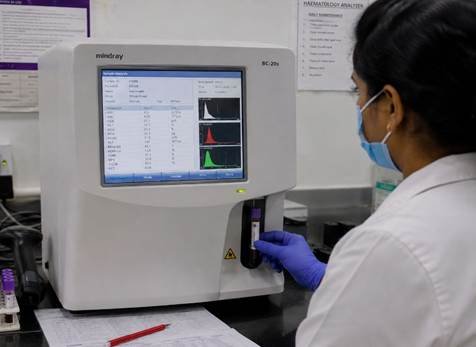
| Department | Key Clinical Laboratory Equipment | Key Tests Performed |
| Haematology | 5-part haematology analyser, coagulation analyser, cell counter | CBC with differential, PT/APTT/INR, platelet function |
| Biochemistry | Biochemistry autoanalyser, electrolyte analyser, HbA1c analyser | LFT, RFT, lipid profile, glucose, thyroid function |
| Microbiology | Autoclave, BSC, CO2 incubator for cultures, PCR | Blood/urine/sputum culture, sensitivity, molecular pathogen ID |
| Pathology/Histology | Tissue processor, microtome, automated stainer, diagnostic microscope | Cancer histopathology, cytology, FNAC, IHC |
| Molecular Diagnostics | Real-time PCR thermocycler, NGS platform in advanced labs | TB, COVID-19, Hepatitis B/C viral load, cancer mutations |
Core Clinical Lab Instruments and Their Functions
These are the most important pieces of clinical laboratory equipment found in every Indian diagnostic centre:
| Clinical Laboratory Equipment | Test Performed | Sample Type | Clinical Significance |
| 5-Part Haematology Analyser | CBC with full leucocyte differential | EDTA whole blood | Anaemia, infection, leukaemia, platelet disorders |
| Biochemistry Autoanalyser | LFT, RFT, lipid profile, glucose, HbA1c, thyroid function | Serum, plasma, urine | Organ function, metabolic disease, chronic disease monitoring |
| PCR Thermocycler | Molecular pathogen detection — TB, COVID-19, hepatitis | Serum, swab, EDTA blood | High-sensitivity pathogen ID; replaces culture for some organisms |
| Coagulation Analyser | PT, APTT, INR, fibrinogen, D-dimer | Citrated plasma | Clotting disorders, anticoagulant monitoring |
| Urine Analyser | Physical, chemical, microscopic urinalysis | Midstream urine | UTI, kidney disease, metabolic disorders |
| Diagnostic Microscope | Manual differential, malaria smear, cytology | Blood smear, urine sediment, FNAC material | Essential quality check; detects organisms not captured by automation |
All critical clinical laboratory equipment in NABL ISO 15189-accredited labs must have current calibration certificates, documented maintenance records, and usage logbooks ready for NABL assessor review.
Pathology Laboratory Equipment
Histopathology clinical laboratory equipment is the core of cancer diagnosis in India — a definitive cancer diagnosis cannot be made without tissue examination. Bangalore’s large private hospital chains including Manipal Hospitals and Narayana Health run high-volume histopathology services requiring a full complement of pathology clinical laboratory equipment.
- Tissue processor: automated overnight fixation, dehydration, and paraffin wax infiltration of biopsy specimens.
- Rotary microtome: cuts paraffin-embedded tissue to 3–5 µm sections for H&E and special staining.
- Automated tissue stainer: applies H&E, special stains, or immunohistochemistry antibody protocols automatically.
- Cryostat: rapid frozen section for intraoperative pathology — diagnosis within 15 minutes while the patient is still in the operating theatre.
NABL Accreditation Requirements for Clinical Labs
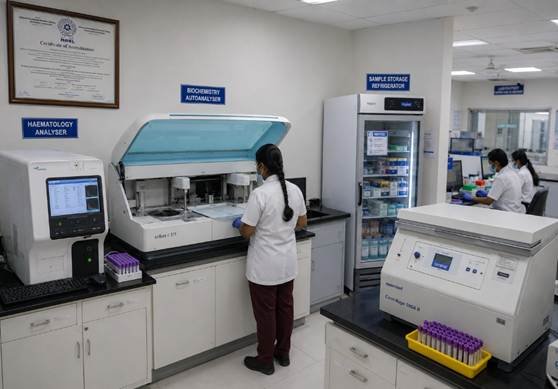
There are more than 8,000 NABL-accredited testing laboratories in India, with clinical diagnostics being one of the fastest growing areas. To receive NABL ISO 15189 accreditation, all clinical laboratory equipment must meet the following six core criteria:
- All clinical laboratory equipment must be calibrated to standards that are traceable to either NPL (India) or SI units with NABL-accredited certification up to date at all times.
- All clinical laboratory equipment must receive preventive maintenance per a documented schedule. The NABL assessors review maintenance records at each surveillance visit.
- Only personnel who have been trained and assessed for competency can independently operate clinical laboratory equipment for NABL accredited testing.
- All tests conducted on clinical laboratory equipment should have a method validation completed and documented; and thereafter appropriately recorded and the results available for review.
- Participation in an External Quality Assurance (EQA) or Proficiency Testing program is required for all labs to show that they perform comparably to other lab(s).
- Complete equipment logbooks must be maintained. Any clinical laboratory equipment showing out-of-tolerance calibration must be removed from service and investigated before results from that period are released.
Setting Up a Diagnostic Lab — Equipment Checklist by Tier
| Lab Level | Minimum Clinical Laboratory Equipment Required | Approx. Equipment Budget (INR) |
| Basic (Haematology + Biochemistry + Urine) | 5-part haematology analyser, biochemistry autoanalyser (30–60 tests/hr), urine analyser, centrifuge, refrigerator, microscope | ₹25–50 lakhs |
| Mid-Level (+ Molecular + Coagulation) | Above + PCR thermocycler, coagulation analyser, HbA1c analyser, electrolyte analyser, BSC | ₹75–150 lakhs |
| Advanced (+ Full Pathology + NGS) | Above + tissue processor, microtome, automated stainer, cryostat, digital pathology scanner | ₹1.5–3 crores+ |
Frequently Asked Questions
Q: What equipment is found in a clinical laboratory?
A: A clinical laboratory typically contains a haematology analyser for CBC, a biochemistry autoanalyser for LFT/RFT/lipid tests, a coagulation analyser, a centrifuge for sample processing, a PCR machine for molecular diagnostics, a urine analyser, and a diagnostic microscope. The calibration of all critical laboratory equipment in the clinical laboratory must comply with NABL ISO 15189 standards.
Q: What are the NABL requirements for clinical laboratory equipment in India?
A: According to NABL ISO 15189, all clinical laboratories must ensure all instruments are calibrated using traceable standards, maintained according to documented schedules, and operated by trained staff with competency assessment. All laboratories shall also be enrolled in an EQA program and shall have complete equipment logbooks recording all clinical laboratory equipment.
Q: What tests are performed in a clinical diagnostic laboratory?
A: The types of laboratory tests performed in clinical laboratories include haematological tests (CBC and ESR), biochemical tests (LFT and RFT, lipid profiles and HbA1c, and thyroid testing), coagulation studies (PT and APTT and INR), serology (HIV, hepatitis, and dengue), urinalysis, microbiological cultures, molecular diagnostics (TB PCR and COVID-19 RT-PCR), and histopathological examination of tissue samples for cancer diagnosis.
Q: How much does it cost to set up a NABL-qualifying diagnostic lab in India?
A: The cost of laboratory equipment required to establish a basic diagnostic laboratory meeting NABL standards in India for haematology, biochemistry and urinalysis is approximately ₹25–50 lakhs. The cost to establish a mid-level diagnostic laboratory that includes molecular diagnostics would be approximately ₹75–150 lakhs. NABL fees, the costs of preparing facilities, and LIS software are additional to these costs. LabXcite in Bangalore can assist with procurement at all levels of funding.
Conclusion
Clinical laboratory equipment is the backbone of healthcare delivery in India — from the haematology analyser in a district hospital to the NGS platform in a Bangalore cancer centre. Investing in the right clinical laboratory equipment, maintaining it to NABL ISO 15189 standards, and building a competent team around it separates a truly reliable diagnostic lab from one that generates questionable results. LabXcite, laboratory equipment supplier in Bangalore, India, supplies clinical laboratory equipment across all tiers. Visit products for the full range.