
Introduction:
PCR technology laboratory work revolves around amplification of a tiny segment of DNA a large number of times so that it can be analyzed or detected easily. This is a technique that has taken the world of PCR technology laboratory testing by storm since its inception and is now carried out on a daily basis in diagnostic laboratories across Bangalore and Karnataka.
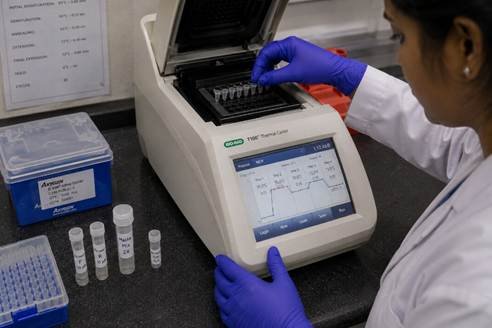
How Does PCR Work? The 3 Steps
All processes that utilize PCR technology are based on 3 stages of heating. The first one is denaturation that takes at about 95 degrees Celsius. The second step is annealing with the temperature being 50 to 65 degrees Celsius when DNA primers are being added to the specific spots on the DNA. The last step is extension at 72 degrees Celsius when enzymes start forming new DNA molecules. The same process is repeated at least 30-40 times with the result being billions of DNA copies being produced from just one small sample of DNA.
What Goes Into a PCR Reaction
To make any PCR technology laboratory run successful, it is crucial to make sure that the right ratios of all the components are used because even the slightest mistakes in concentrations of all materials can lead to the failure of the reactions.
- Taq polymerase – enzyme for synthesizing DNA
- Primers – short DNA pieces that indicate the target site
- dNTPs – constructs for the synthesis of DNA
- Buffer and magnesium – substances for maintaining the composition of the reaction
- Template DNA – sample for analysis
Types of PCR
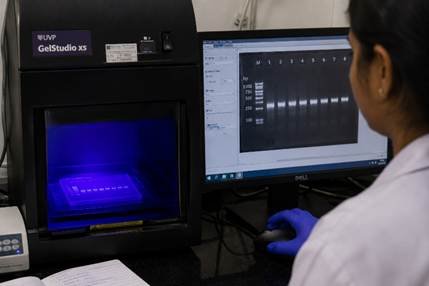
Depends on the type of analysis chosen, the process of DNA copying through heat and cold remains the same.
| PCR Type | Main Use |
| Conventional PCR | Basic detection, gel-based |
| Real-time PCR (qPCR) | Measuring exact DNA amount |
| RT-PCR | Testing RNA, like viruses |
| Nested PCR | Extra sensitive detection |
| Multiplex PCR | Testing many targets at once |
| Digital PCR | Very precise counting |
PCR vs qPCR
Conventional PCR gives a yes-or-no answer after the reaction finishes, checked on a gel. qPCR (real-time PCR) tracks the reaction as it happens using glowing dyes, giving an exact count of starting DNA. Most PCR technology laboratory diagnostic tests today rely on qPCR because it is faster and more precise, and it removes the need for slow gel-based checks.
PCR Diagnostic Uses in India
These diagnostic tests show just how widely PCR technology laboratory methods are trusted across Indian hospitals and diagnostic chains today.
- TB testing using GeneXpert machines.
- COVID-19 RT-PCR testing.
- HPV screening.
- Tests for viral load of hepatitis B and C.
- Detection of dengue.
- Blood culture analysis.
FREQUENTLY ASKED QUESTIONS
Q: How does PCR work in a molecular biology laboratory?
A: The polymerase chain reaction (PCR) technique is based on three repeated thermal processes for DNA copying: denaturation, where the double-stranded DNA separates into single strands, annealing, where DNA primers bind to the target DNA sequence, and extension, where multiplication of the copied DNA strands takes place by the use of enzyme.
Q: What are the 3 main steps of PCR?
A: Denaturation occurs at around 95 degrees Celcius where the heating process separates DNA strands. The second step is the annealing of primers at temperatures between 50 and 65 degrees Celcius and finally comes extension at approximately 72 degrees Celcius, where new DNA strands are being produced.
Q: What is the difference between PCR and qPCR?
A: The result of normal PCR methodology is only observed at the end of the whole process, where the gel test has to be done, as opposed to qPCR which allows to observe the real-time process of DNA replication in qPCR.
Q: How do I set up a basic PCR reaction?
A: When doing PCR, one has to prepare a reaction mix of master mix, forward primers, and reverse primers, DNA template and distilled water, and then to follow the procedure on a thermocycler. It is important to use the blank tube that is not containing any DNA as a control.
Conclusion
PCR technology laboratory testing has changed the way we detect viruses, modify genes and study genetics. Therefore, knowledge of the different processes involved in PCR and PCR types is beneficial in making the right choice of test/equipment to be used either for diagnostics or research. Getting your PCR technology laboratory started? LabXcite, laboratory equipment supplier in Bangalore, India, offers thermocyclers and PCR reagents with local support – view our PCR range now.