
Introduction:
Laboratory filters membranes use their abilities in separating unwanted particles and microorganisms from liquid and gases during both experiments and manufacturing processes. Picking the correct laboratory filters membranes, in the right pore size and material, decides whether your filtration achieves true sterility or just basic clarification.
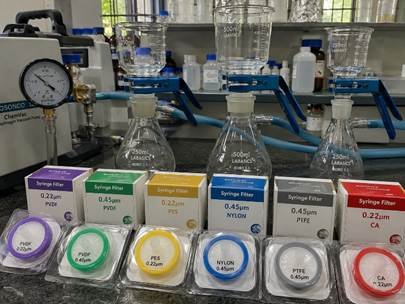
What Are Laboratory Filters and Membranes?
Laboratory membranes filters are made in different versions. Some examples include vacuum filter units, capsules filters, and syringe filters, which come with pore sizes from 0.1 microns and more. Choosing the right laboratory filters membranes format depends on your sample volume and how fast you need to filter it.
Membrane Materials
Matching the material correctly is just as important as pore size when choosing laboratory filters membranes for a specific job.
| Material | Key Property | Best Application |
| PES | Very low protein binding | Cell culture media |
| PVDF | Low binding, broad compatibility | Protein samples, HPLC |
| PTFE | Hydrophobic | Air filtration, harsh solvents |
| Nylon | General purpose | Aqueous samples |
| Cellulose acetate | Low cost | Basic aqueous filtration |
Pore Size Selection Guide
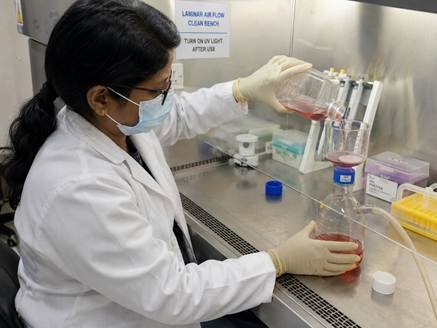
Knowing this pore size chart makes choosing between different laboratory filters membranes far easier for day-to-day lab tasks.
| Pore Size | What It Removes | Common Use |
| 0.1 µm | Viruses | Biopharmaceutical processing |
| 0.2 / 0.22 µm | Bacteria | Sterile filtration |
| 0.45 µm | Large particles, debris | Clarification, HPLC prep |
| 5-10 µm | Coarse particles | Pre-filtration |
FREQUENTLY ASKED QUESTIONS
Q: What pore size filter is used for sterilization in a laboratory?
A: A 0.2 or 0.22 micron filter is the standard laboratory filters membranes choice for sterile filtration, since it is small enough to remove all bacteria from a liquid sample. A 0.1 micron filter is used when even viral particles must be removed.
Q: What is the difference between PVDF, PTFE, and PES membrane filters?
A: The types of membrane filters have several unique characteristics: PVDF filters are with low protein binding ability and high compatibility with solvents; PTFE filters are hydrophobic, which makes them very capable of filtering gases/strong solvents, while PES filters are considered to be the most proficient in matters of protein binding.
Q: What can a 0.45 µm filter be used in a laboratory?
A: A 0.45 μm filter is utilized for clearing of liquids by eliminating visible particles and debris; however, it does not filter bacteria and cannot be utilized for sterilization. This type of filter is employed in the preparation of HPLC mobile phases.
Q: What syringe filter can be used for HPLC preparation?
A: For HPLC preparation purposes use a syringe filter with a pore size ranging either from 0.2 or 0.45 microns where one should choose PTFE or PVDF materials for organic solvents and PES or nylon for aqueous samples. Please avoid using cellulose-based filters since they may drip down materials with negative impacts on detection processes.
Conclusion
Choosing the right laboratory filters membranes, in the correct pore size and material, protects your samples and ensures your filtration does exactly what your protocol needs. From sterile filtration to simple clarification, getting this small detail right makes a big difference. Need syringe filters or vacuum filtration units? LabXcite, laboratory equipment supplier in Bangalore, India, and we provide products such as laboratory filters and membranes – explore our range today.