
Introduction:
Culture media microbiology employs the practice of cultivating microorganisms in specific nutrient formulations for research purposes. Picking an appropriate culture media microbiology technique is extremely important for correct diagnosis, food checking, and research projects in Indian laboratories.
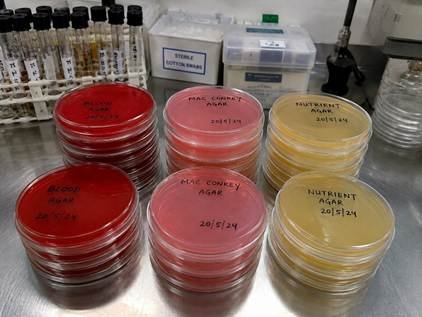
What Is Culture Media in Microbiology?
Culture media microbiology preparations come as solid agar plates, semi-solid gels, or liquid broths, each packed with nutrients that microbes need to grow. Some media are simple and general purpose, while others are built to favour one type of organism over another.
Types of Culture Media and Their Functions
This range of culture media microbiology types lets labs match the exact medium to the organism they are trying to find.
| Media Type | Function | Example |
| General purpose | Supports wide range of growth | Nutrient agar, blood agar |
| Selective | Blocks unwanted organisms | MacConkey agar |
| Differential | Shows colour differences between organisms | MacConkey agar (lactose test) |
| Enrichment | Boosts small numbers of target pathogens | Selenite broth |
| Transport | Keeps samples alive during transit | Stuart’s transport medium |
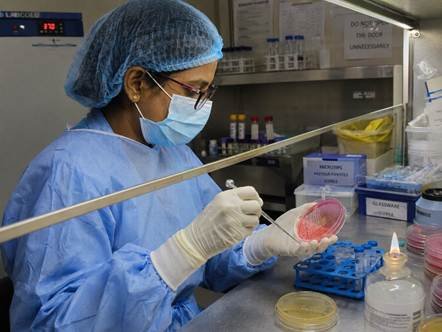
Selective vs Differential vs Enrichment Media
Interestingly, some media in culture media microbiology work do two jobs at once, such as MacConkey agar, which is both selective and differential in the same plate.
| Feature | Selective | Differential | Enrichment |
| Main job | Blocks unwanted growth | Shows visible differences | Boosts target numbers |
| Example | MacConkey agar | MacConkey agar (colour) | Selenite broth |
How to Prepare Culture Media
Careful preparation is one of the most important parts of good culture media microbiology practice, since a small mistake can ruin an entire batch.
- Weigh the dehydrated media powder correctly.
- You should dissolve the components of culture media in distilled water.
- If necessary, you would have to adjust the pH value of the media solution to approximately 7.0-7.4.
- Culture media should be packed in vials or tubes.
- The mixture should be autoclaved at the temperature of 121 degrees Celsius for 15 minutes.
- Coagulate agar at around 50-55 degrees Celsius and then transfer it into containers.
- Pour into either sterile Petri dishes or keep in broth form.
- Carry out quality checks of the agar before using.
Quality Control for Culture Media
- Conduct sterility tests so as to ensure that the agar is not contaminated.
- Pulling off performance tests based on the database of reference strains.
- Ph testing must be carried out before release.
FREQUENTLY ASKED QUESTIONS
Q: What are the main types of culture media used in microbiology?
A: Within microbiology, culture media could be classified according to purpose as being either general-purpose media used for common growth, selective media which is designed to prevent the growth of some organisms, differential media which allows distinction of different microbes visually, enrichment broth which allows growth of small amounts of pathogens, and transport media that makes it possible to avoid destruction of samples during transportation.
Q: What is selective culture media and when is it used?
A: Selective culture media are designed to inhibit the growth of particular microorganisms while permitting the growth of specific microorganisms. The need for selective culture media arises when it is necessary to isolate a single organism from the multitude of organisms present in a sample e.g. MacConkey agar is used to grow only gram-negative organisms.
Q: What is the difference between selective and differential media?
A: The difference between selective media and differential media lies in the fact that while the selective media block the growth of the unwanted microorganisms, the differential media allow many types of microorganisms to grow yet provides some information about their classification through color changes depending upon their metabolic activities.
Q: What are the steps involved in preparing culture media in microbiology?
A: The steps would include measuring the dehydrated media accurately, dissolving it in distilled water, modifying the pH (if necessary), ETO sterilizing the media, allowing it to cool before pouring onto liquid media plates, and conducting quality checks before using it for actual samples.
Conclusion
Precise and efficient culture media microbiology practices like choosing the right culture media and carrying preparations carefully are important factors contributing to the success of microbial testing in clinical diagnostics or food safety. Proper culture media preparation in these labs relates to the validity of every subsequent outcome in testing. Are you looking for quality culture media for your microbiology lab? LabXcite, laboratory equipment supplier in Bangalore, India, and provides a variety of culture media and consumables for you to see!