
Introduction:
An analytical instruments laboratory is where scientific measurement happens — where raw data is turned into defensible results that drive decisions. Every analytical instruments laboratory depends on precise, well-calibrated instruments to generate the numbers that matter for quality control, research, and regulatory submissions. LabXcite is a Bangalore, Karnataka, India-based analytical laboratory equipment supplier for the pharmaceutical, food, clinical and R&D sectors that meets the analytical instrument needs for laboratories worldwide.
What Are Analytical Instruments in a Laboratory?
Analytical instruments are a class of devices used to measure, identify and quantify a sample’s physical, chemical or biological characteristics. They are the core of any analytical instruments laboratory — the instruments that take a prepared sample and produce a number, spectrum, or profile that represents real scientific information. India’s analytical instruments laboratory sector is growing at 9–11% CAGR, driven by NABL accreditation requirements, pharma QC expansion, and FSSAI food safety enforcement. (Source: Industry reports)
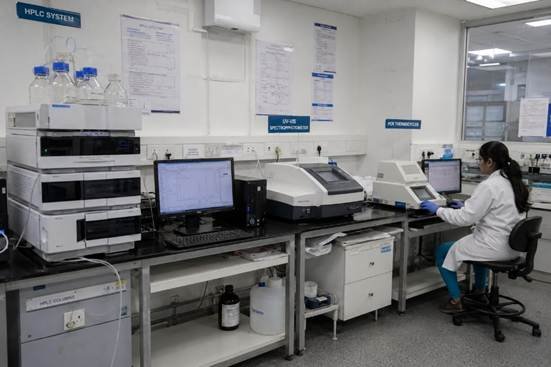
Master Overview: Types of Analytical Instruments
These eight instruments cover the core measurement needs of most analytical instruments laboratory setups in India. A typical analytical instruments laboratory will use several of these daily, with the exact combination depending on sector and test scope:
| Instrument | Measurement Principle | Primary Application | Typical Lab |
| UV-Vis Spectrophotometer | Light absorbance at specific wavelengths | Protein/DNA quantification, drug assay, food colour | Pharma QC, molecular biology |
| HPLC System | Chromatographic separation by polarity or size | Purity, assay, pesticide residue, related substances | Pharma QC, food testing, environmental |
| PCR Thermocycler | Thermal cycling amplifies specific DNA/RNA | Pathogen detection, gene expression, diagnostics | Clinical, research, forensics |
| pH Metre | Electrode potential proportional to H+ activity | Solution pH, buffer prep, in-process QC | Universal — all lab types |
| Mass Spectrometer | Ionisation and mass-to-charge ratio separation | Structural ID, trace quantification | Pharma, forensic, environmental |
| SPR Biosensor | Refractive index change at gold chip surface | Binding kinetics, drug-target interaction | Biopharma R&D |
| Ion Chromatograph | Conductivity detection of separated ions | Anions/cations in water, food, pharma samples | Environmental, clinical, food |
| Karl Fischer Titrator | Coulometric or volumetric endpoint detection | Water content, moisture determination | Pharma QC, food chemistry |
Every analytical instruments laboratory should also consider which instruments need to be qualified (IQ/OQ/PQ) for GMP use and which need NABL-traceable calibration for accredited testing.
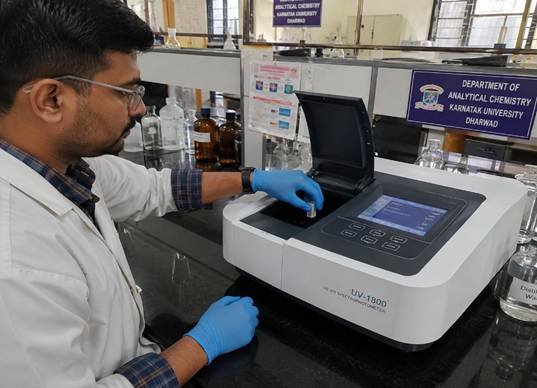
Analytical Instruments by Laboratory Type
Knowing which analytical instruments laboratory type you are running helps narrow the instrument list quickly:
| Lab Type | Primary Analytical Instruments | Key Parameters Measured |
| Pharmaceutical QC | HPLC, UV-Vis spectrophotometer, Karl Fischer, dissolution tester | Assay, purity, water content, drug release profile |
| Clinical Diagnostics | Biochemistry autoanalyser, haematology analyser, PCR thermocycler | Enzyme levels, CBC, pathogen nucleic acid |
| Food Testing | HPLC, AAS, GC-MS, moisture analyser, colony counter | Pesticide residue, heavy metals, nutritional content |
| Environmental | AAS/ICP-OES, GC-MS, BOD/COD reactor, ion chromatograph | Heavy metals, VOCs, organic load, water ions |
| Academic R&D | Spectrophotometer, PCR, SPR biosensor, NMR (advanced) | Gene expression, binding affinity, structure |
How to Select Analytical Instruments for Your Lab
- Start with your measurement list. Write down every parameter your analytical instruments laboratory must measure — analyte, matrix, required sensitivity, and throughput. Every instrument decision should trace back to this document.
- Match instrument capability to your detection limit. An analytical instruments laboratory measuring pesticide residues at ppb level needs HPLC or GC-MS, not a basic spectrophotometer. Undershooting detection limit capability produces unreliable data.
- Think about throughput from the start. A high-volume analytical instruments laboratory processing 50–100 samples daily needs autosampler capability and fast cycle times. A single-position instrument becomes a bottleneck quickly.
- Check to make sure your analytical instrument laboratory Preferred Instrument is serviceable by an NABL-accredited Calibration Facility before you make your purchase to confirm you have an instrument that is calibrated against NABL standards and that meet ISO certified calibration requirements.
Frequently Asked Questions
Q: What are analytical instruments in a laboratory?
A: Analytical instruments are commonly used for quantitative testing in analytical instruments laboratory; they are used across the board of scientific investigation. Having access to high quality manufacturers of analytical instruments for laboratory use in India has been made possible by advances in spectral photometry, polymerase chain reaction (PCR) thermocyclers, pH meters, and high-performance liquid chromatography (HPLC) and mass spectrometry.
Q: What are the most common analytical instruments in Indian labs?
A: Pharmaceutical manufacturers will utilize three forms of equipment primarily for analytical testing: HPLC systems, dissolution testers, and analytical balances. All equipment used in laboratories accredited by the National Association of Lab Quality Assurance (NABL) has been calibrated to an ISO/IEC17025 standard, or a reference calibration was made against such a standard.
Q: How do I choose analytical instruments for my research laboratory?
A: To begin, determine the kind of measurement type you want to make, and select the right instrument that meets your criteria (sensitivity, throughput, bench space and cost) based on your project requirements. You should consider how much local service and calibration support is available. LabXcite – Bangalore offers laboratory instruments and a complete solutions provider for Analytical Instruments laboratory in India; you’ll find that they provide a full line of aftersales support as well!
Q: Are analytical instruments covered under NABL accreditation?
A: Yes, compliance with NABL ISO/IEC 17025 for critical test instruments used in accredited laboratories requires that all critical instruments are calibrated with national traceability standards and are maintained on a documented schedule and that they are operated according to approved operating procedures by trained personnel, and that calibration certificates are current and available for audit at all times.
Conclusion
A well-equipped laboratory of analytical instruments gives your team, clients and regulators capability to trust the accuracy and reliability of all data produced from these tests. Whether you are building a new analytical instruments laboratory from scratch or upgrading existing instruments, starting with a clear measurement requirements document and verifying NABL calibration capability from day one prevents expensive corrections later. LabXcite, laboratory equipment supplier in Bangalore, India, supplies the full range of analytical instruments laboratory equipment with installation, calibration, and service support. Visit products to explore the catalogue.