
The spectrophotometer principle refers to how light is utilized in order to determine the concentration of a specific element in liquid. The concept is very simple: a sample that has high concentration absorbs more light. For this reason, the spectrophotometer principle can be utilized for various lab missions worldwide, from DNA purity checking to protein quantification.
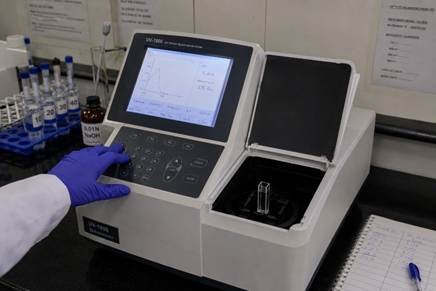
How Does a Spectrophotometer Work?
A lamp generates light which is sent through the solution. In this case, a detector finds out how much light has passed through the solution. The fact that less light passes through the solution indicates that it has absorbed more light and thus is more concentrated. The basic principle of the spectrophotometer is used in almost all laboratory tests based on light absorption, regardless of the specific test type, be it a DNA test or a drug component analysis.
Beer-Lambert Law Explained Simply
The principle of the spectrophotometer is the Beer-Lambert law expressed in form of the equation Absorbance = e x c x l; where e is a constant for a particular substance, c stands for concentration, and l is referring to the path length traveled by light in the sample. This works well within a normal range, but very high or very low absorbance readings can become less accurate, so understanding the limits of the spectrophotometer principle helps you trust your results.
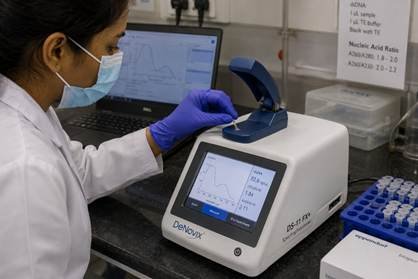
Types of Spectrophotometers
Every type on this list works from the same spectrophotometer principle of light absorption, just adapted for different sample sizes and wavelengths.
| Type | Common Use |
| UV-Vis (standard) | General lab testing, pharma QC |
| Microvolume | DNA and RNA quantity checks |
| Microplate reader | ELISA and cell-based tests |
| Near-infrared (NIR) | Food and raw material checks |
Common Lab Uses
All of these tasks apply the same spectrophotometer principle, which is why this instrument is considered essential in almost every analytical and molecular biology lab.
- Measuring DNA and RNA amount and purity.
- Checking protein concentration.
- Interpreting results of ELISA testing.
- Tracking bacteria growth in culture.
- Testing pharmaceutical ingredient strength.
A260/A280 Ratio for DNA and RNA Purity
This ratio compares light absorbed by nucleic acids to light absorbed by proteins, using the same spectrophotometer principle discussed earlier. A pure DNA sample usually reads about 1.8, and pure RNA reads close to 2.0. A lower value is often an indication of protein being present in the sample and interfering with subsequent laboratory processes like PCR and sequencing.
FREQUENTLY ASKED QUESTIONS
Q: How does a spectrophotometer work in a laboratory?
A: A spectrophotometer shines beam of light through the sample and measures the amount of light that comes out from the other side. It tells how much concentrated the sample is using Beer-Lambert law.
Q: What is Beer-Lambert law?
A: Beer-Lambert law states that absorbance is proportional to concentration of the sample and distance light has traveled through it making it convenient for scientists to measure concentration in their samples by measuring absorbance.
Q: What is the A260/A280 ratio used for?
A: The mentioned ratio indicates the selected DNA or RNA sample purity. A reading near 1.8 usually means clean DNA, and near 2.0 means clean RNA, while lower numbers suggest protein contamination.
Q: What is the difference between UV-Vis and fluorescence spectrophotometers?
A: A UV-Vis spectrophotometer measures how much light a sample absorbs, working with most common lab compounds. A fluorescence spectrophotometer measures light given off by glowing molecules, and it is far more sensitive for very small sample amounts.
Conclusion
The more you know about the spectrophotometer operation, the better you can rely on your absorbance results and choose the most suitable equipment for different experiments. Be it DNA analysis or pharmaceutical research, this concept is applied in numerous laboratories for the provision of valid and reproducible results every single day. Are you searching for a spectrophotometer you can rely on? LabXcite, a supplier of laboratory equipment located in Bangalore, India offers you UV-Vis instruments and microvolume spectrophotometers, as well as professional assistance.