
Introduction:
Laboratory consumables are products that are used up or have a limited lifespan during laboratory testing and day-to-day lab activities. Unlike laboratory equipment, which can be used for years, consumables are regularly replaced. Choosing the right laboratory consumables is important for accurate results, contamination control, regulatory compliance, and effective lab cost management.
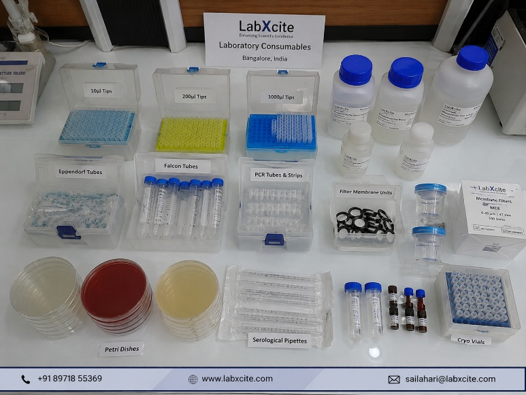
Alt Tag: Laboratory consumables including pipette tips, PCR tubes, petri dishes and reagent bottles arranged on a Bangalore research lab bench — natural flat-lay
What Are Laboratory Consumables?
Put simply, laboratory consumables are everything in a lab that gets used up and needs to be replaced. Pipette tips, Eppendorf tubes, petri dishes, nitrile gloves, reagent bottles, filter membranes, cell culture flasks — all of these are laboratory consumables. They are the items you go through every single day, and running out of the right ones mid-experiment is one of the most frustrating things that can happen in a research lab.
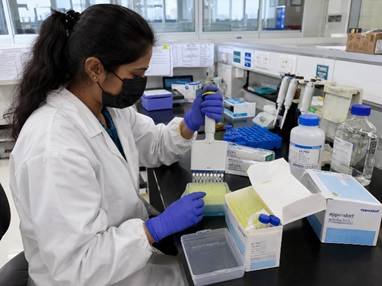
LabXcite, laboratory equipment supplier in Bangalore, Karnataka, India, supplies a complete range of laboratory consumables to research institutions, pharmaceutical companies, and diagnostic labs across the country. Their consumables catalogue covers every major category — from basic plasticware to specialist membrane filters and cryogenic storage tubes. You can explore it at labxcite.com/consumables/.
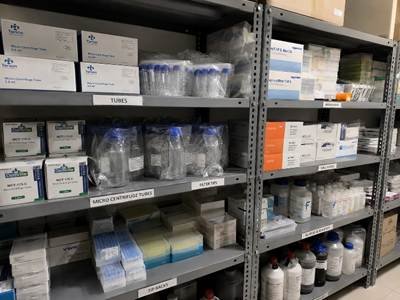
The 7 Categories of Laboratory Consumables
Here is a clear breakdown of the seven main categories you will encounter in any research or testing lab:
| Category | Examples | Common Applications | Lab Type |
| Plasticware | Eppendorf tubes, falcon tubes, PCR plates, pipette tips, well plates, petri dishes | Molecular biology, cell culture, general lab work | Universal |
| Glassware | Beakers, Erlenmeyer flasks, test tubes, volumetric flasks, cuvettes | Chemistry, analytical work, heating, measuring | Chemistry, pharma, food testing |
| Reagents & Chemicals | Buffers, staining solutions, solvents, acids, bases | Sample preparation, reactions, calibration | All sectors |
| Filter Membranes & Syringe Filters | 0.2 µm and 0.45 µm PVDF, PES, PTFE syringe filters, vacuum filtration units | Sterilisation, HPLC prep, sample clarification | Pharma, molecular biology, analytical labs |
| Safety PPE | Nitrile gloves, safety goggles, lab coats, face masks | Personal protection during chemical and biological work | All labs handling hazards |
| Culture Media | Nutrient agar, blood agar, MacConkey agar, LB broth | Growing and identifying bacteria and fungi | Microbiology, food testing, clinical diagnostics |
| Cryogenic & Storage Items | Cryovials, liquid nitrogen containers, parafilm, sample labels | Long-term sample and cell line storage | Biobank, R&D, cell biology |
Laboratory Consumables vs Equipment — What Is the Difference?
This is one of the most common points of confusion when setting up a lab budget. Here is the simple way to think about it: equipment is capital expenditure (centrifuges, HPLC systems, autoclaves), while laboratory consumables are operational expenditure (tubes, tips, reagents, gloves). Equipment is depreciated over years; consumables are expensed as you use them.
| Attribute | Laboratory Consumables | Laboratory Equipment |
| Lifespan | Single use or a few uses | Years to decades |
| Budget type | Operational (recurring) | Capital (one-time) |
| Replacement frequency | Weekly to monthly | Every 5–15 years |
| Purchase decision | Procurement officer / lab manager | Research director / finance team |
| Regulatory documentation | Batch records, expiry tracking | Calibration certificates, IQ/OQ/PQ |
In most Indian research labs, annual laboratory consumables spending is roughly equal to — or higher than — annual equipment maintenance spend. This makes consumables procurement one of the most important budget management tasks for any lab manager.
How to Choose Laboratory Consumables — 5 Criteria
With hundreds of options available for every consumable type, here are five criteria that help you choose correctly:
- Material compatibility. Your consumable must be chemically compatible with the substances it will contact. Polypropylene tubes handle most organic solvents well; polyethylene does not. Glass is preferred over plastic when the sample contains trace organics that can leach from plastic walls.
- Sterility requirements. Pre-sterilised consumables (gamma-irradiated or ETO-treated plasticware) are essential for cell culture and any application where contamination must be zero. For non-sterile preparative work, autoclave-compatible consumables are often more cost-effective.
- Volume and size match. Ordering 1.5 mL Eppendorf tubes when your protocol requires 2 mL samples wastes reagent and introduces error. Always check the volume range before ordering — it sounds obvious, but this mistake costs Indian labs time and money regularly.
- Good Manufacturing Practices laboratories require consumables compliant with the pharmaceutical grade standard. NABL-accredited food labs need FSSAI-compliant media. If your work feeds into a regulated submission, your consumables must meet those standards too.
- Supplier reliability. Lead times, batch consistency, and local availability matter enormously in a working lab. A consumable that takes four weeks to arrive from overseas is a supply chain risk. Sourcing from a Bangalore-based supplier like LabXcite reduces that risk significantly.
| India Procurement Tip: Negotiate with the suppliers of consumables to get an annual supply contract based on the Estimated Yearly Offering (EYO). Use this negotiation to lower prices, get preferential allocation in stock, and reduce lead times on critical materials to avoid stockouts when performing an experiment. |
Laboratory Consumables Procurement in India
India’s laboratory consumables supply landscape has changed significantly over the last decade. Domestic manufacturing has grown, import substitution has improved quality at lower price points, and Bangalore has emerged as the primary procurement hub for life sciences consumables in South India.
The Indian laboratory consumables market was estimated at over INR 3,000 crore in 2022 and is growing alongside the broader lab equipment sector. Bangalore research institutions — including IISc, NCBS, IBAB, and dozens of pharma companies in the Whitefield and Electronics City corridors — collectively place tens of thousands of consumable orders every year.
- These consumables should also be imported from countries like India, where there is a large base of suppliers who can do so with an additional lead time of 2 to 5 days as opposed to an importing agent whose lead time is about 4 to 6 weeks.
- Request CoA for every batch of reagents; this will be required for GMP and NABL compliance.
- Maintain 3 to 4 weeks’ worth of safety stock for your most commonly used consumables to alleviate supply chain outages.
- Check with suppliers to see if they offer bundled pricing options when placing orders for consumables with equipment; many suppliers, such as LabXcite, offer packages.
Cost Management for Laboratory Consumables
Given that you operate on a limited budget but want to maintain good quality for consumables, these are six things that could help you save on consumable costs.
- Keeping tube and tip sizes consistent throughout your laboratory could result in less administration work (since there would only be three or four SKU’s) and allow you to qualify for greater volume pricing due to fewer purchases (i.e., by purchasing less).
- Track expiry dates actively. Expired reagents are a double loss — you paid for them and cannot use them. A simple spreadsheet or LIMS module pays for itself quickly.
- Bulk order stable, non-expiring consumables like tubes, plates, and gloves when prices are favourable.
- Utilize reagent grade chemicals (not premium ACS reagent grade) during non-critical preparative steps, and save the premium grades for final assay where purity is of utmost importance.
- Consider using reusable lab ware rather than using single use plastic labware where washing / autoclaving would be appropriate for non-sterility critical applications.
- Review your consumables usage data quarterly. Labs routinely discover they have overstocked slow-moving items and understocked fast-moving ones.
Frequently Asked Questions
Q: What are laboratory consumables?
A: Laboratory consumables are limited use items required for experimentation and include, but are not limited to, pipette tips, eppendorf (or other brands/types) tubes, petri plates, filter membranes, polyethylene gloves, reagents, and culture media. Unlike laboratory equipment, which can last for many years, laboratory consumables are thrown away after one or two uses (to prevent cross contamination and ensure accuracy of the results). Every laboratory utilizes these types of consumables on a daily basis.
Q: What is the difference between laboratory consumables and equipment?
A: Equipment (e.g., centrifuges, spectrophotometer, autoclave) has a long lifespan (i.e., years) and represents a capital expenditure that will be depreciated over that timeframe. Consumables (e.g., items that are only used once or a limited number of times) must be purchased on a continuous basis as they are used, and are therefore an ongoing operational expenditure that will continue until the item is no longer generally usable. In a productive research laboratory located in India, consumable expenditures generally exceed or are equal to the total annual expenditure of maintenance on equipment.
Q: What are examples of laboratory consumables?
A: Examples span many categories: plasticware (Eppendorf tubes, falcon tubes, PCR plates, petri dishes, pipette tips), glassware (beakers, flasks, cuvettes), reagents (buffers, staining solutions, culture media), filter membranes, syringe filters, safety PPE (nitrile gloves, safety goggles, face masks), and cryogenic storage tubes. The exact combination varies based on the lab’s research focus and sector.
Q: Where can I buy laboratory consumables in Bangalore?
A: LabXcite is a company based in Bangalore, Karnataka which offers a wide variety of laboratory consumables (i.e., plasticware, glassware, reagents, filters/membranes, safety supplies, etc.) to research laboratories and pharmaceutical companies throughout India. All consumables available from LabXcite can be found by going to their website labxcite.com/consumables/.
Q: How do I manage laboratory consumables costs effectively?
A: By consistently using the same consumables in your laboratory, you will simplify ordering and help to get better prices. In addition, you also need to implement a method for tracking your inventory of items ordered to avoid purchasing too much and also wasting products because they will be reaching their expiration date. For consumables you use in the assay, you want to purchase higher quality for critical steps and lower quality for non-critical steps. You will also want to purchase consumables from a reputable local supplier (for example, LabXcite in Bangalore) to help you reduce lead time and therefore, decrease unit cost.
Conclusion
Laboratory consumables are the lifeblood of a working lab — you can have all the best instruments in the world, but without the right consumables, you cannot run a single experiment. Getting your consumables procurement right — choosing the correct materials, maintaining steady supply, and managing costs sensibly — is one of the most impactful things a lab manager can do. LabXcite, laboratory equipment supplier in Bangalore, India, stocks a complete consumables range and ships across India. Visit consumables to see the full catalogue.